Your Cycle Is a Rhythm — And PCOS Disrupts the Flow
For a lot of us, there is no one obvious sign. Instead, small things start to add up until they are impossible to ignore.
The late period we brush off.The acne that lingers longer than it should.The chin hairs that seem to show up out of nowhere.The appointment where you hear, “everything looks normal,” even when our body says otherwise. And then, eventually, maybe, a name: PCOS. Polycystic ovary syndrome affects about 1 in 10 women, and up to 70% of people with PCOS may not know they have it. For Black women, that gap can feel even wider because delayed diagnosis, dismissal, and fragmented care often shape the experience long before anyone connects the dots.
Too often, the conversation stops at weight or fertility. But PCOS can affect much more than that. It can shape your hormones, metabolism, mood, skin, energy, cycle, and long-term health.
Up to 70% of people with PCOS may not know they have it.
PCOS Isn’t What Most People Think It Is
If you’ve ever Googled PCOS, you’ve probably seen images of ovaries covered in cysts. But despite what the phrase polycystic ovary syndrome suggests, many people with PCOS do not actually have ovarian cysts at all. And many people who do have cysts do not have PCOS.
Diagnosis usually comes from a combination of features such as:
irregular or absent menstrual cycles
higher levels of androgens, hormones like testosterone
ovaries that show many immature follicles on an ultrasound
Providers often use the Rotterdam Criteria, which means having two out of those three features. So PCOS is less about cysts and more about how hormones communicate with each other throughout the body.
If you are a Black woman trying to make sense of PCOS, here is what matters: it may be just as common, but the risks around it are different.
Research shows Black women with PCOS may be more likely to deal with insulin resistance, higher blood pressure, and metabolic syndrome. That risk can show up early, including in adolescence and young adulthood.
So if you have been told to wait it out, focus only on weight, or come back when you are ready to get pregnant, keep reading.
The Hormone Conversation We Should Have Learned in Health Class
Your menstrual cycle is one of the most sophisticated communication systems in the body. At the center of it is the HPO axis, short for the hypothalamus, pituitary gland, and ovaries. Think of it as a hormonal group chat.
01
Your brain sends signals.
→
02
Those signals tell your ovaries when to mature an egg.
→
03
Ovulation happens.
→
04
Progesterone rises.
→
05
The cycle resets and begins again.
→
When everything is working smoothly, the cycle moves through four distinct phases, each with its own hormonal shifts and physical experiences.
Your cycle has a rhythm
In a typical cycle, these phases flow into one another. But with PCOS, that flow can get disrupted. Ovulation may not happen consistently. Progesterone may stay low. Estrogen can linger without balance. And suddenly your cycle feels unpredictable, inconsistent, and confusing.




Understanding the Menstrual Cycle and Hormones
The Four Different Patterns of PCOS
If you have ever wondered why someone else’s PCOS sounds nothing like yours, this is why. PCOS does not show up the same way in every body. These patterns are not for self-diagnosing, but they can help you notice what may be driving your symptoms and what questions to bring into care.
1. Insulin-Resistant PCOS
This is the most common pattern. When your body is not responding well to insulin, it makes more of it. That can raise testosterone levels and make ovulation less consistent.
You may notice:
irregular periods, feeling tired after meals, strong sugar cravings, weight changes around the midsection, acne, or facial hair growth.
2. Adrenal PCOS
In this pattern, the stress-response system plays a bigger role. The adrenal glands can make extra androgens even when insulin levels look normal.
You may notice:
irregular cycles, jawline acne, anxiety, poor sleep, or feeling wired but tired
3. Inflammatory PCOS
Inflammation can interfere with hormone signaling, raise androgen levels, and disrupt ovulation.
You may notice:
brain fog, digestive issues, skin flare-ups, bloating, fatigue, or a general sense that your body feels inflamed.
4. Post-Pill PCOS
This can happen after stopping hormonal birth control, when hormone patterns rebound and temporarily look like PCOS.
You may notice:
previously regular cycles, new acne after stopping the pill, and irregular periods for several months.
No matter the pattern, good PCOS care usually means looking at blood sugar, ovulation, stress, inflammation, and your day-to-day symptoms together.
Your Guide to Nutrition With PCOS
Food is not the whole story with PCOS, but it is one important part of support.
Your Guide to Nutrition With PCOSA practical starter guide to blood sugar support, meal building, snack ideas, and simple nutrition shifts that support hormones without food shame.
Dear Kyn 💌
Will I still be able to get pregnant with PCOS?
Yes. Many people with PCOS can and do get pregnant. PCOS is one of the most treatable causes of infertility. The challenge is not whether pregnancy is possible. It is whether ovulation is happening consistently. And ovulation matters beyond fertility.
It supports:
bone health
metabolism
mood
hormone balance
So this is not just about getting pregnant. It is about your whole body.
Care Conversations
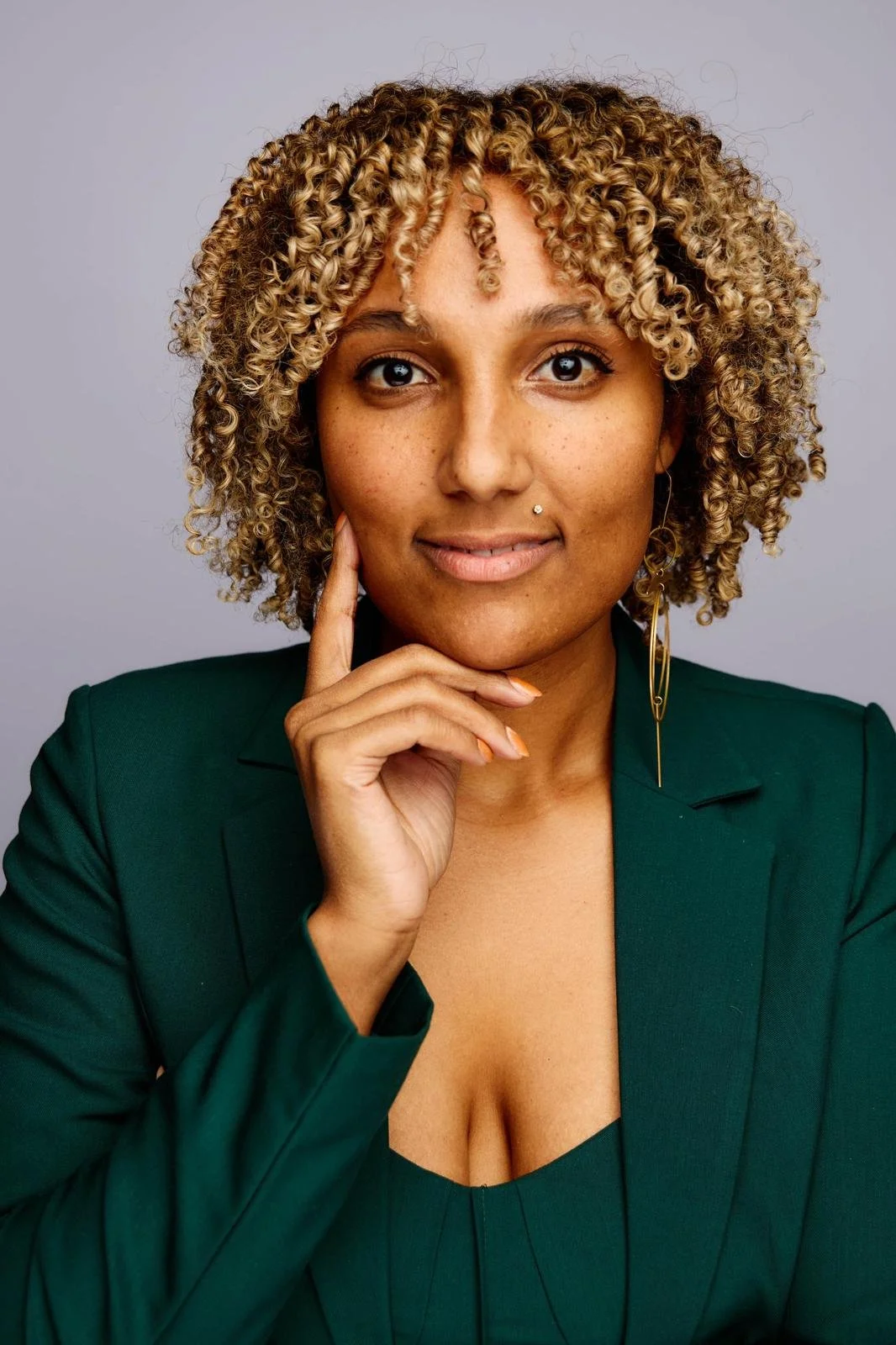
A conversation with Tesiah Coleman
MSN, AGPCNP-BC, WHNP-BC, CLC
-
That there’s one hormone causing all the chaos. PCOS is more of a pattern than a single imbalance. Insulin, androgens, stress, ovulation, and inflammation all affect each other. So if you only look at one thing, you can miss the bigger story.
-
Because normal on paper and okay in your body are not always the same thing. Too often, labs are reviewed in isolation, without anyone really connecting them to your symptoms, cycle, or the full picture. And the truth is, a lot of what medicine calls “normal” was built around a default patient that never centered Black women. So even when something gets labeled fine, that does not always mean you are being fully seen or understood. That’s where people start to feel dismissed. I’m looking at patterns, context, and how you actually feel, not just whether a number made it into range.
-
One of the first things I want to know is whether ovulation is happening. That tells us a lot, fast. When ovulation is off, it can be a clue that the rest of the hormonal system is under strain too.
-
Sometimes, yes. Sometimes medication is part of the picture too. It really depends on what’s driving the issue. I’m not attached to forcing one approach just to prove a point. Good care is about understanding the root cause and building the right mix of lifestyle support, supplements, and medical treatment for your real life.
-
It feels clarifying. To me, good care means you’re not just handed a lab result and sent on your way. It means someone actually connects the dots. You understand what may be happening, why it matters, and what support makes sense for your real life. You leave feeling informed, supported, and less alone in it. I think so many people have gotten used to leaving appointments with more questions than answers, or feeling quietly dismissed. But it doesn’t have to be like that. It shouldn’t be like that.

If this blog feels familiar, you do not have to figure it out alone. And you do not need to force your body into balance. You need care that helps you understand what your body is asking for, and then helps you get it.
Kyndred was built for that kind of care. Thoughtful. Culturally responsive. Root-cause focused. Grounded in the reality of Black women’s lives.
Ready to start?
Start here if you are not sure what is going on
WTF Visit
A two-visit deep dive that looks at your labs, hormones, metabolism, and cycle patterns together so you can get a clearer picture of what is actually happening in your body. Labwork included in cost.
Start here if you are ready for structured support
Rhythm & Flow
A 12-week care program designed to help you rebuild cycle consistency, improve metabolic health and insulin sensitivity, support hormone balance, and understand your body in real time.
Start here if you need a lower-lift entry point
Cycle Clarity Mini
A focused 4-week starter with intake, labs, results review, foundational nutrition and lifestyle support, Sugar lessons, and community access.
the Kyndred Edit: resources